
Call Us
+385 51 336 341
Contact Us
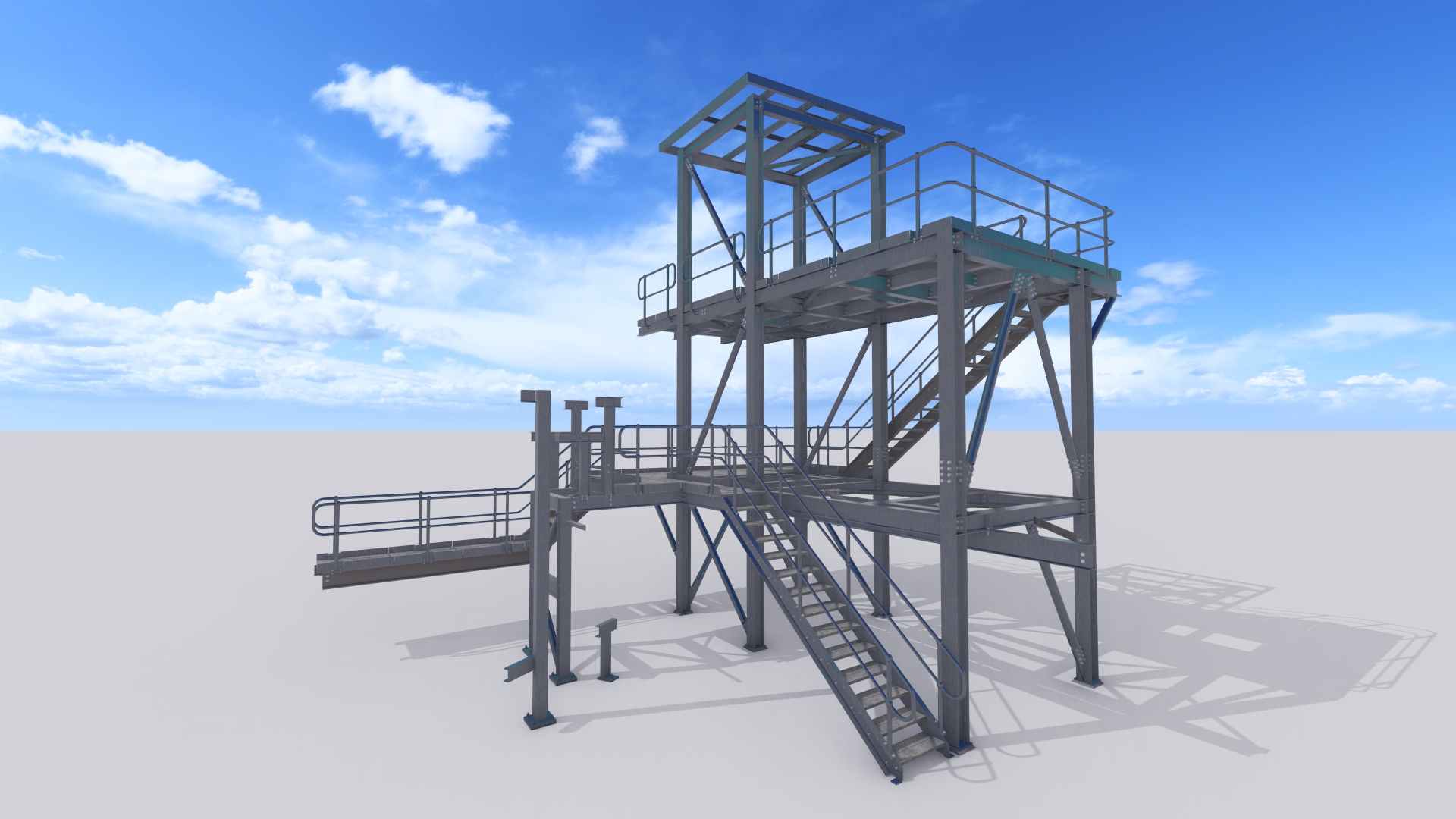
The previous phases of this project involved the development of a complex steel structure with hundreds of custom solutions, requiring careful coordination, connection development, and detailed modelling.
This phase was different.
Instead of starting from scratch, we were able to build directly on the work already completed.
The module itself was compact and clearly defined, but its real advantage came from sharing the same structural logic and connection philosophy as the larger model. The custom components developed during the earlier stage had already been tested, coordinated, and established within the project environment.
That meant there was no need to repeat the intensive development process.
From development to application
The IFC model remained the base reference, but its role was different this time. Rather than serving as the starting point for extensive development, it primarily became a verification tool.
With the overall geometry and layout already coordinated, our focus could be narrowed to the actual connection detailing.
This included:
Only minor parameters needed to be adjusted to suit the local geometry.
The value of a well-structured first phase
This is where the real efficiency of a properly developed steel model becomes visible.
A project does not necessarily become easier because the second phase is smaller. It becomes easier when the first phase has established a clear and reusable system.
By carrying the same connection philosophy and proven components into the new module, we avoided unnecessary redesign, repeated coordination, and redundant modelling work.
There were no new connection concepts to develop and no extensive coordination cycle to repeat. The task became primarily one of accurate adaptation and verification.
Small model, significant efficiency
Although this sub-model was much smaller than the previous structure, it demonstrates an important principle in steel detailing:
Efficiency is not simply about modelling faster. It is about creating solutions that can be reliably reused.
The result was a fully detailed, consistent, and fabrication-ready sub-model completed in a fraction of the time that would normally be required for a standalone development.
The compact size of the model is therefore not what makes this phase interesting. Its value lies in demonstrating what happens when good engineering decisions made early in a project continue to deliver benefits later.
Sometimes, the best engineering is the one you don’t have to think about twice.