Call Us
+385 51 336 341
Contact Us
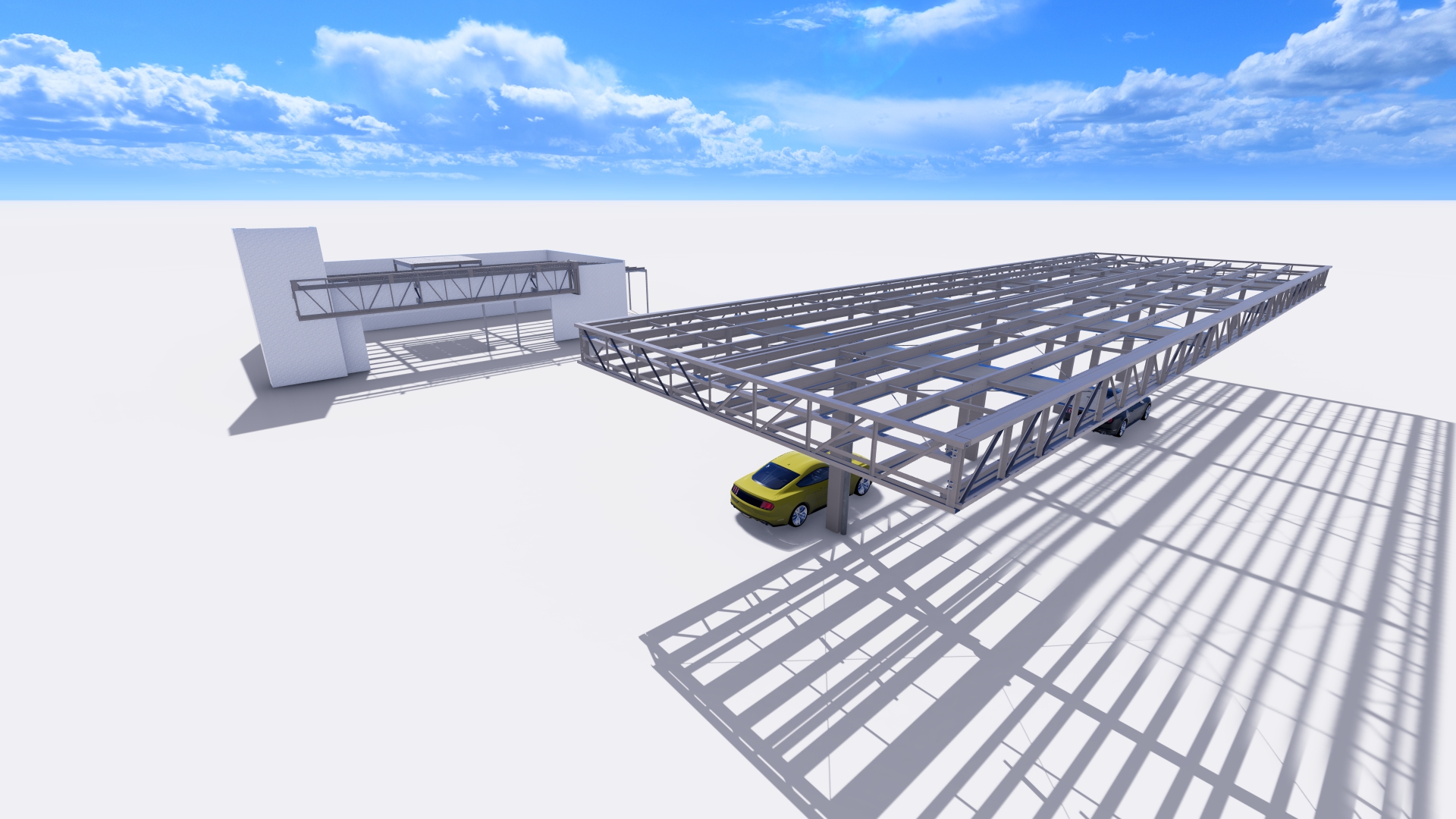
The 7-Eleven Orana Clyde North project was delivered in two distinct phases, Canopy and Tenancy, each presenting its own coordination requirements and detailing challenges. By maintaining close collaboration with the client throughout the project, we ensured that every stage was delivered with a strong focus on constructability, accuracy, and seamless integration with other building elements.
Phase 1 – Canopy
The first stage of the project focused on the design and detailing of the steel canopy structure.
Although the canopy appears to be a relatively straightforward steel structure, its successful execution relied heavily on careful coordination with the building services. Steel member locations had to be strategically arranged to avoid clashes with mechanical, electrical, and other service installations that would ultimately occupy the same space.
This required detailed modelling and continuous coordination to ensure that the structural solution not only met engineering requirements but also allowed sufficient space for all associated building services. Early consideration of these interfaces helped minimise potential site conflicts and contributed to a smoother construction process.
Phase 2 – Tenancy
The second phase concentrated on the tenancy steelwork, where the primary challenge involved coordinating the structural steel with the precast concrete wall panels.
To achieve full compatibility, the steel structure was carefully modelled and detailed around the precast elements, ensuring that member locations, connections, and interfaces aligned with the project’s architectural and structural requirements. Accurate coordination at this stage was essential to support efficient fabrication and installation while reducing the risk of costly modifications during construction.
Solving Connection Challenges Through Collaboration
As with many steel projects, a number of connection-related challenges emerged throughout the detailing process. Rather than treating these as isolated issues, they were addressed through close communication with the client and a collaborative approach to problem-solving.
By reviewing the project requirements together and proposing practical detailing solutions, the connection issues were successfully resolved while maintaining the overall design intent. This collaborative workflow helped ensure that the final steel package remained both efficient to fabricate and straightforward to install.
Delivering a Coordinated Steel Model
From the initial canopy structure to the tenancy steelwork, the project demonstrated the importance of coordination between structural steel, precast concrete elements, and building services.
Through detailed modelling, careful planning, and ongoing collaboration with the client, the project resulted in a coordinated steel solution that supported efficient fabrication, installation, and overall project delivery.