Call Us
+385 51 336 341
Contact Us
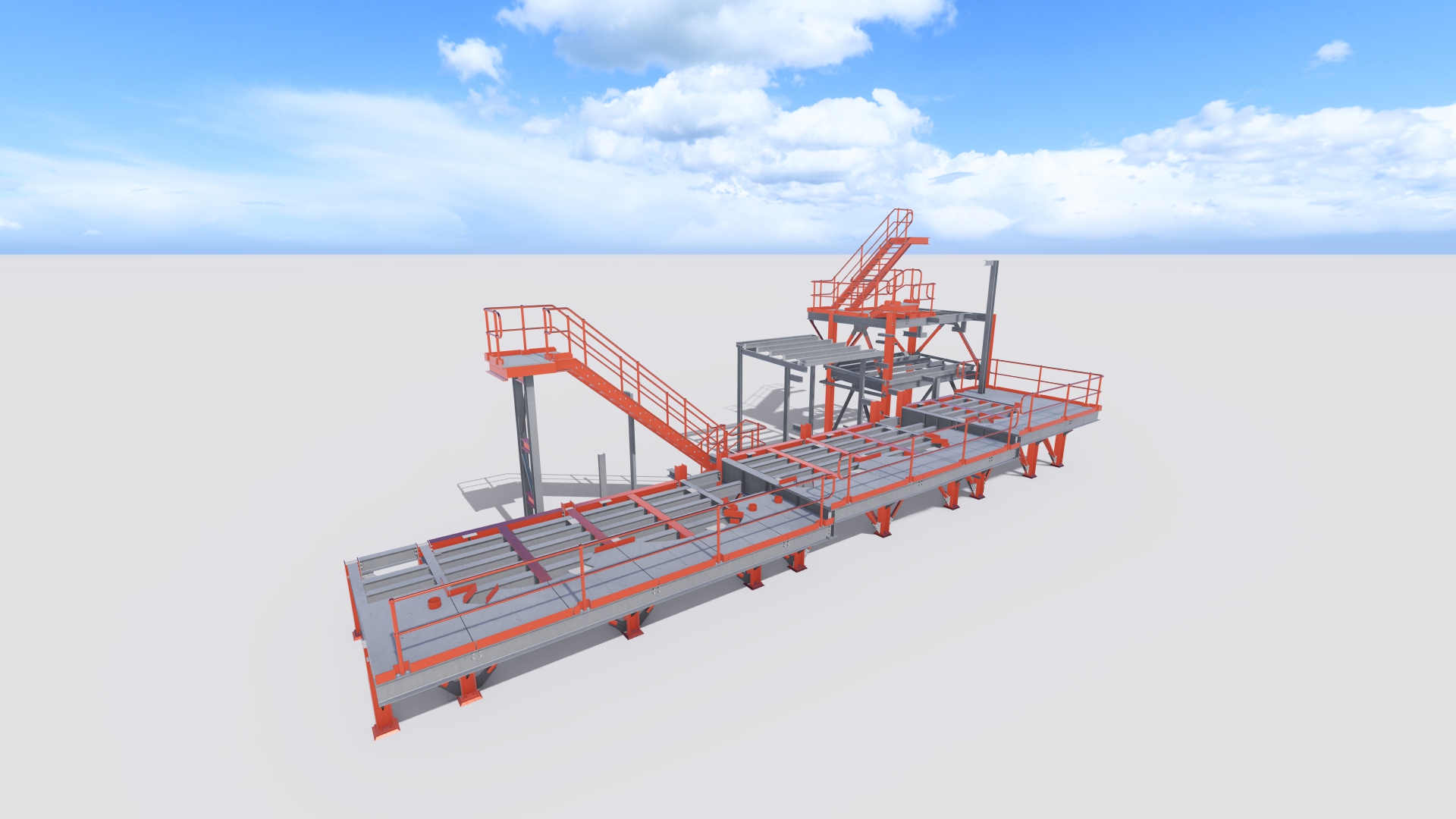
At Cadeli, most of our time is spent working on large, complex projects where coordination, detailing, and constant iteration are part of the daily routine. But every now and then, a smaller task comes along, the kind that feels like a “brain on a leash.” More focused, more controlled, and often surprisingly efficient. This model is one of those cases.
Part of something bigger
Although smaller in scope, this task is not isolated. It is a segment of a much larger project, built directly on top of previously developed models, connection logic, and established workflows. Because of that, a significant amount of decision-making had already been done. Instead of starting from scratch, the process became one of continuation, taking what already works and applying it consistently. This is where real efficiency starts to show.
Reusing logic instead of reinventing it
The main focus of this model was on structural connections. Rather than redesigning them, standardized solutions from the previous project phase were reused and adapted where needed.
This approach brings multiple advantages:
In practice, it also allows engineers to stay focused on what actually matters, instead of re-solving already solved problems.
IFC as a starting point
An IFC model was used as the base reference for the overall geometry. This enabled a fast and reliable setup of the structural system without unnecessary rework.
Using IFC in this way supports:
Rather than being a constraint, it becomes a tool for acceleration.
Keeping things intentionally simple
One of the key decisions on this project was to keep the model as clean and minimal as possible.
No unnecessary detailing, overcomplication or “just in case” elements.
The result was a stable and efficient workflow, without technical interruptions or performance issues. And perhaps more importantly, a model that remains clear, readable, and easy to work with in later stages.
A small reminder from a small task
Projects like this are a good reminder that efficiency in BIM and structural modeling doesn’t always come from advanced techniques or complex solutions.
Sometimes, it comes from:
Even within large and demanding projects, these smaller segments play an important role, not just in delivery, but in maintaining clarity and momentum across the entire workflow.
At Cadeli, that balance between complexity and simplicity is something we continuously aim to refine.